
Energy Gum vs Energy Drinks vs Coffee: What's the Difference?
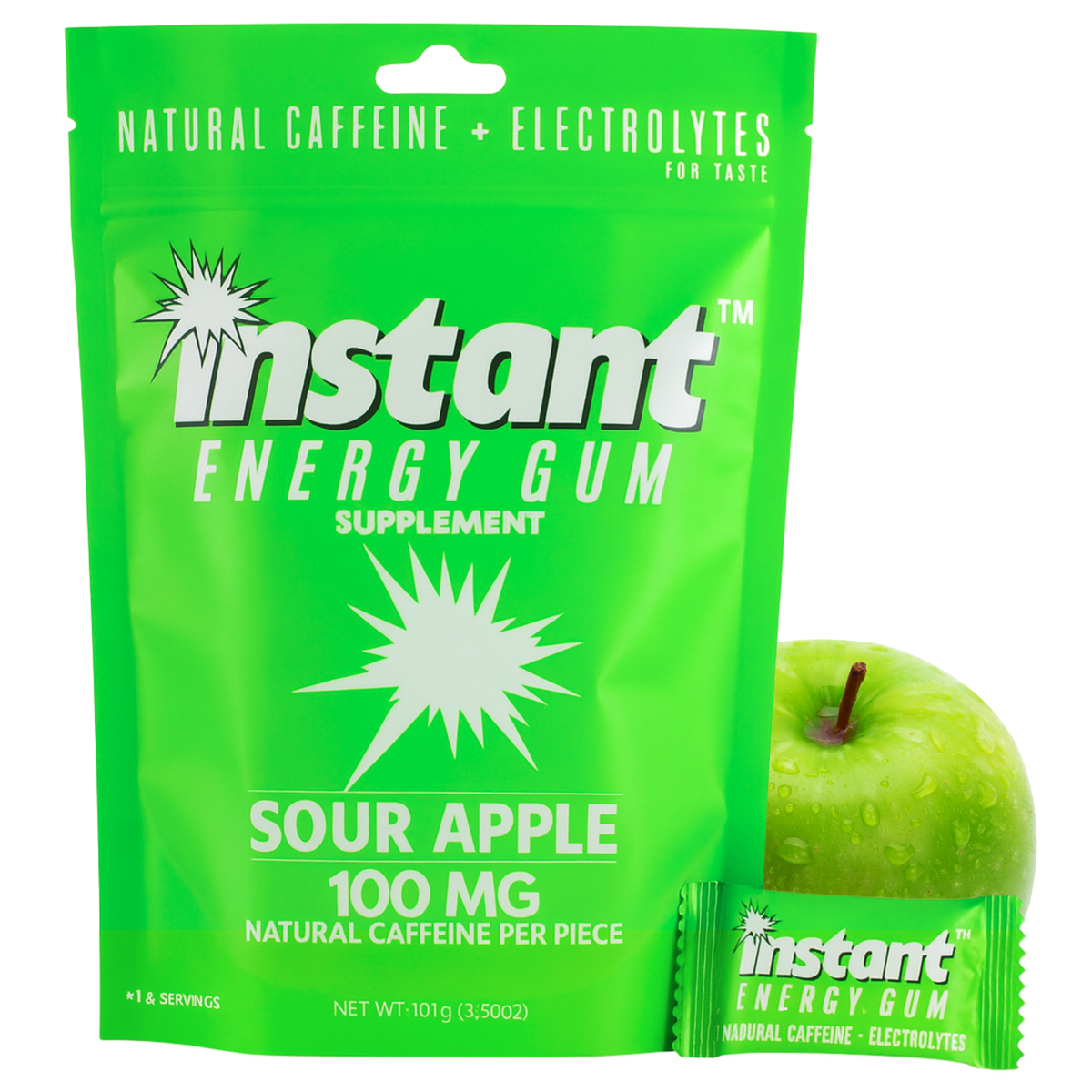
Caffeine is caffeine, but how you take it changes how fast it can hit, what comes along with it and how easy it is to overdo. Here is how energy gum stacks up against coffee and energy drinks on the things that matter.
Energy gum vs energy drinks vs coffee at a glance
| Instant Energy Gum (1 piece) | Brewed coffee (8 oz) | Energy drink (8 oz) | |
|---|---|---|---|
| Caffeine | 100 mg | 96 mg | 79 mg |
| Sugar | 0 g, sugar free | 0 g if you take it black | Varies by drink. Many have sugar, some are sugar free |
| How it gets in | Chewed. Part can absorb through your mouth | Swallowed and absorbed in your gut | Swallowed and absorbed in your gut |
| Carrying it | Fits in a pocket | Needs a cup and a way to brew | Cans and bottles are bulkier |
| Dose control | One piece at a time, amount on the label | Depends on the brew and cup size | Depends on the can size |
Coffee and energy drink figures are from the Mayo Clinic. They vary by brand and how the drink is made, and many energy drink cans hold 16 ounces, which roughly doubles the number.
Caffeine: how much are you getting?
A piece of Instant Energy Gum has 100 mg of natural caffeine, about the same as a cup of brewed coffee. The difference is how easy it is to keep count. Each piece is a known dose, printed on the wrapper. A mug of coffee or a can of energy drink can be anywhere from modest to a lot.
Speed
Coffee and energy drinks are swallowed, so their caffeine is absorbed in your gut. Gum is chewed, and part of the caffeine can be absorbed through the lining of your mouth. In the best-known study, Kamimori et al., 2002, gum reached the blood sooner than capsules.
There is no head-to-head study of Instant against coffee, so we will not promise gum beats your latte. What we can say is that many people notice caffeine gum in about 5 to 15 minutes, and there is nothing to brew, cool down or pour. The details are in how caffeine gum works.
Sugar and ingredients
Instant Energy Gum has no sugar. It is sweetened with xylitol, maltitol and sucralose, with no aspartame, no food dyes and no artificial flavors. Black coffee is just coffee. Energy drinks vary, so read the label: many have sugar, some use other sweeteners, and some have added ingredients such as taurine or B vitamins. One note on gum: sugar alcohols such as xylitol and maltitol can upset your stomach if you overdo them.
Convenience and cost
A 15-piece bag of Instant is $14.95, about $1 a piece at the regular price, and prices can change. Coffee at home usually costs less per cup, and café coffee and cans often cost more per serving. Where gum wins is the bag in your pocket: no cup, no fridge, no cleanup, nothing to spill.
Safety works the same way for all three
The FDA says up to 400 mg of caffeine a day is not generally associated with dangerous effects for most healthy adults, however it arrives. Count coffee, energy drinks and gum together. Caffeine gum is not for anyone under 18, or for people who are pregnant, nursing or sensitive to caffeine, and xylitol is dangerous for dogs. This is general information, not medical advice.
Which should you pick?
- Pick gum if you want a measured, sugar-free dose you can take between classes, in a meeting or at the gym without carrying a drink.
- Pick coffee if you like the ritual, want something warm and are at home or near a café.
- Pick an energy drink if you want something cold and fizzy. Check the sugar and the total caffeine in the can.
- Mixing them? Add it all up. The limit applies to the total.
Want to see how gum brands compare with each other? Read best caffeine gum, or browse our sugar-free energy gum.
Last updated September 2026. Instant Energy Gum makes caffeine gum, and this comparison links its sources so you can check them.